
July 2020
CSP walk and talk
28/07/20 18:25

Although much like the conditions of this day last year, tonight’s Crieff walk was only blessed with a few sightings of up to ten swifts and no comings and goings at nests. We will give it another go on the 5th if anyone wants to join Dave at 8:00 p.m. at James Square (safe distancing applies of course). If you’re not sure about how to tell a swift from a swallow or if you want to learn a bit about these enigmatic birds please join in for a walk around the town. If you have information on nest sites you have recorded this season, please feel free to hand it over on the 5th as well. Dave will record your details so the sitings can be properly attributed.
Call systems where no electricity available
27/07/20 18:26
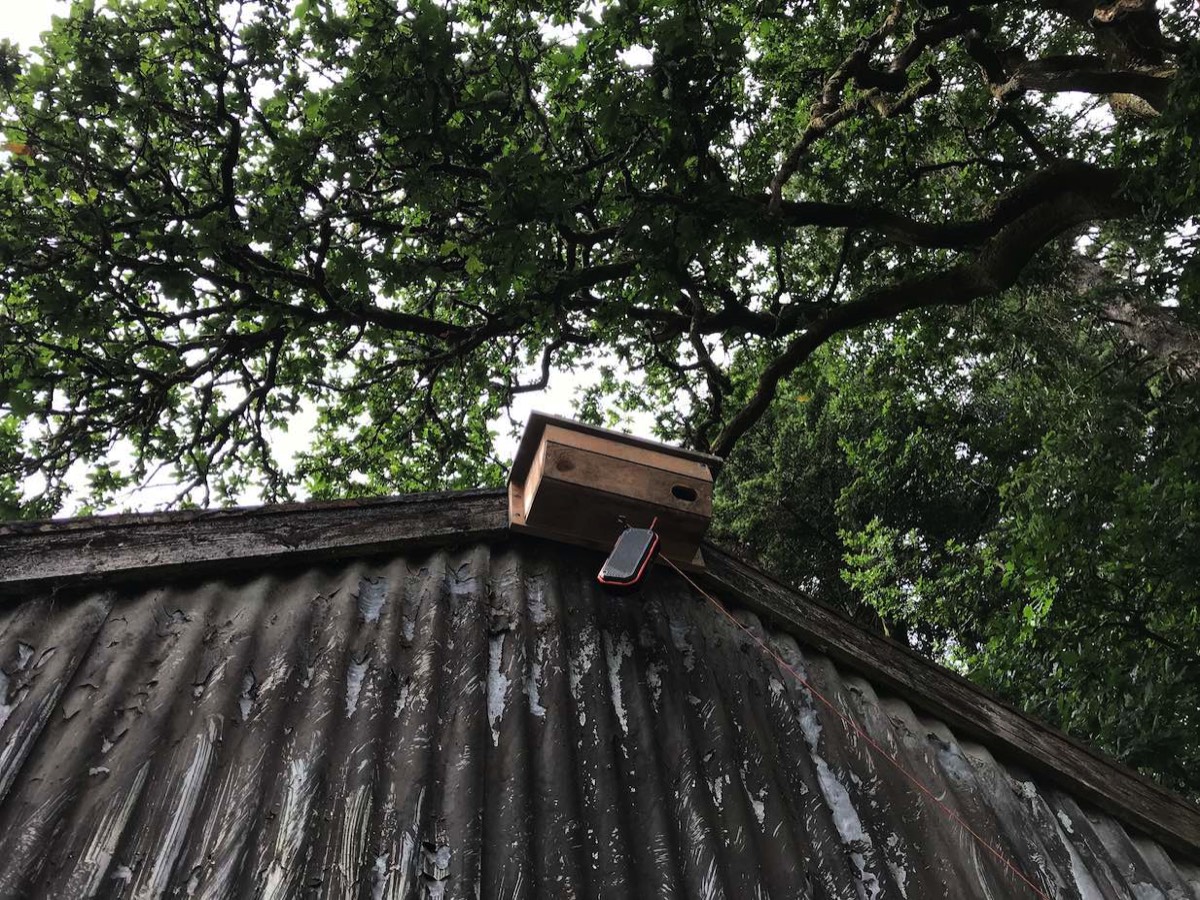
We had a bit of a problem with this new nest site as there is no electricity available nearby and it is too far from the nearest building for bluetooth to work, so the call systems we have deployed in the past were not going to work here. I discussed it with Martin Ridley who is constantly trying new ways of making swift nest call systems and he had a few things up his sleeve but I could not find a battery powered solution which permitted intermittent programmed timings. The advantage of having a bit of calling, now and then, is that it can be adapted to what your neighbours find tolerable and, though I cannot prove it, I think that occasional calling provokes interest with swifts more reliably than a constant noise, dawn to dusk… discuss.
In the end I opted for a BT526 bluetooth stereo speaker which operates from before breakfast to after dinner without running out of power, set quite loud. I put the swift music mp3s on a 32GB micro SD card, copying it until it filled up the card so it does not stop. The BT526 is water proof but I hung it from a hook on the bottom of this nest to give it shelter from heavy showers. Not being able to programme it means I have to go to it and winch it down to turn it off and to USB charge it over night but it is not a bad compromise. If it were within bluetooth range I would be able to broadcast from the house and set timings on the computer or other output device. At £27 on Amazon it is great value and the sellers say that if you give them a review and send them details of the purchase they will send you a second one for free. They sound pretty good playing regular music too and the second unit would allow a more effective stereo sound stage (they can be linked). So if you have a nest site which is not near power, there are options. Product plug over.

Bumblebees sidebar
17/07/20 18:28
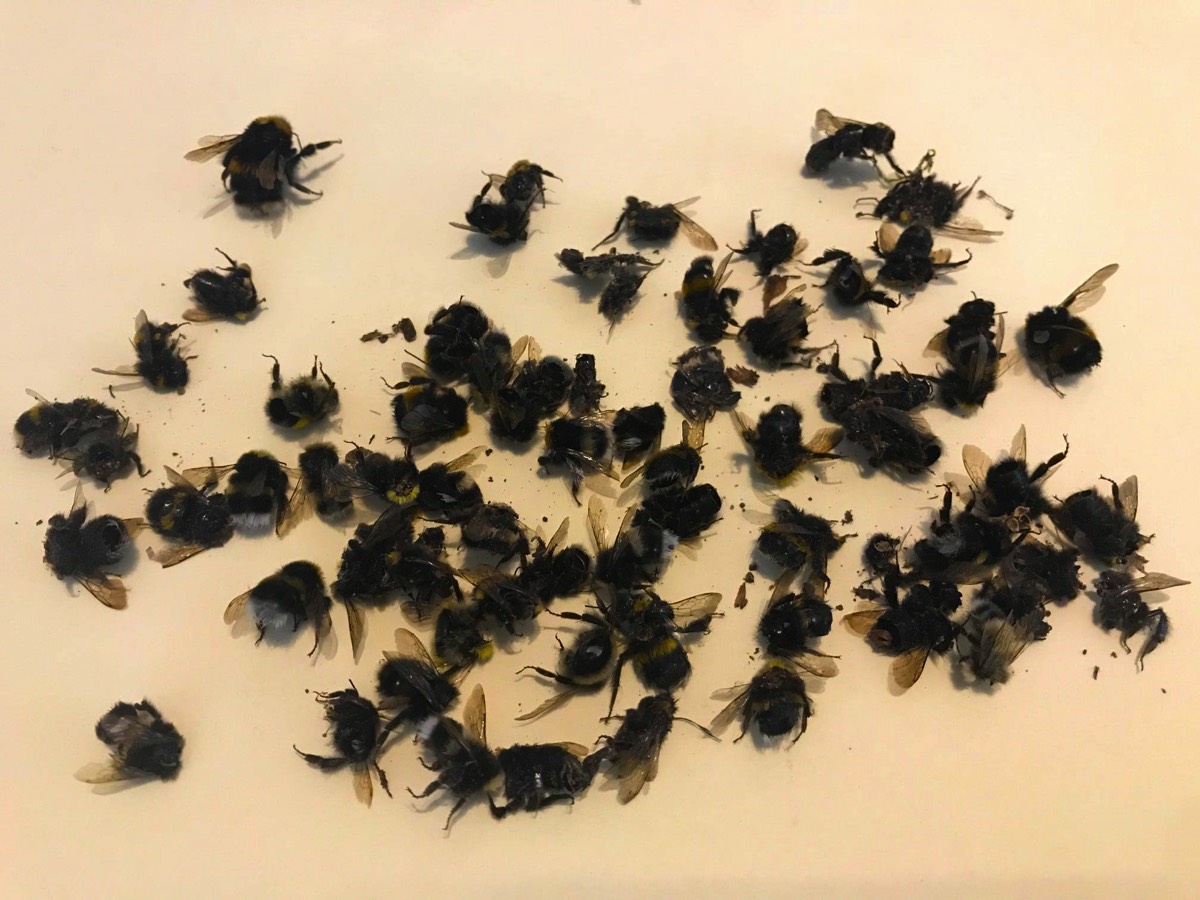
Not a swift matter but remarkable enough to warrant a mention. Today, Fiona found large numbers of dead and dying white tailed bumble bees (bombus lucorum) on the driveway and in the grass under the two lime trees in the garden. The picture shows roughly fifty, a fraction of the number which have died in the whole area under these trees. We have never seen anything like it and could probably have filled a two gallon bucket with them.
According to the Bumblebee Conservation Trust, this is a common thing but only with lime trees. The lime tree nectar has a very low sugar content but contains an addictive metabolite which causes bees to keep feeding, even though they are not getting energy from the nectar. Resulting in the bees eventually falling to the ground without enough energy to fly and they starve to death.
Just now the trees are alive with feeding bumblebees and it is said that strong healthy bumblebees are less likely to succumb. These bees were infested with bumblebee mites which feed on stuff attaching to the bumblebee, rather than the bumblebee itself but they can probably impede flight if there are sufficient numbers.
These dead bumblebees have been preyed upon as some have been eaten out and many have had the sting removed.