
Muthill swifts
25/06/20 18:30
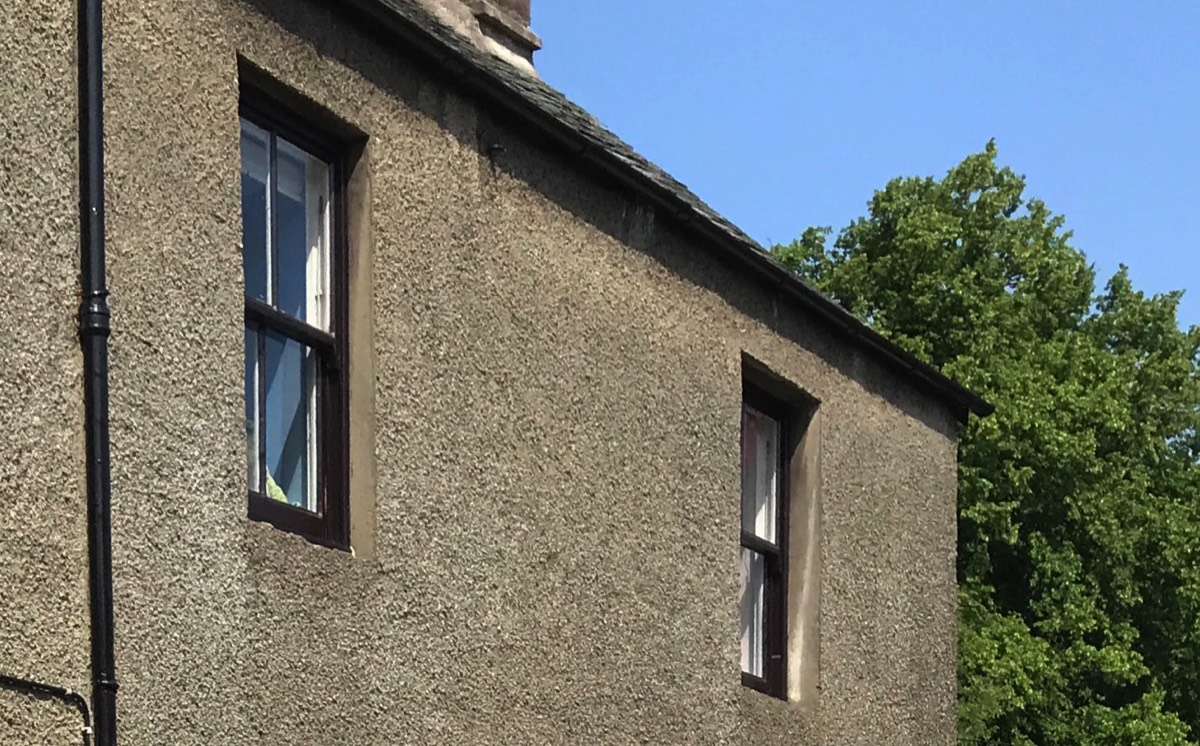
I cycled to the village this morning and was pleased to see lots of swift activity. There was a group which split into two groups and then reformed and then split. One group focused on the west side of Willoughby Street and the other group did circuits of Drummond street with occasional eaves level cruises up and down the road, looking at the eaves of various buildings as they went, clearly a group of "bangers". A few spent some time looking in to these existing nests. I counted five, none of which had appeared on the survey last year though they would appear to be established sites.
New volunteer
16/06/20 18:17
We have a new volunteer working for TBP and for CSP in Crieff.

George Winter, from Derbyshire, is a graduate in Environment & Sustainability and is currently working on his MSc in Environmental Management at the University of Stirling. However, before he returns to his studies in September he has been helping us with the Crieff swift boxes deployment and, thanks to his endeavours, we should get a few more boxes placed this season, news of which will appear here or in the apodiblog. Look out for George in Crieff and be sure to stop him and give him any information you have about swift activity you have seen, especially nest sites which we may not have recorded yet.
George Winter, from Derbyshire, is a graduate in Environment & Sustainability and is currently working on his MSc in Environmental Management at the University of Stirling. However, before he returns to his studies in September he has been helping us with the Crieff swift boxes deployment and, thanks to his endeavours, we should get a few more boxes placed this season, news of which will appear here or in the apodiblog. Look out for George in Crieff and be sure to stop him and give him any information you have about swift activity you have seen, especially nest sites which we may not have recorded yet.
Wee GSWs getting fed
14/06/20 18:32
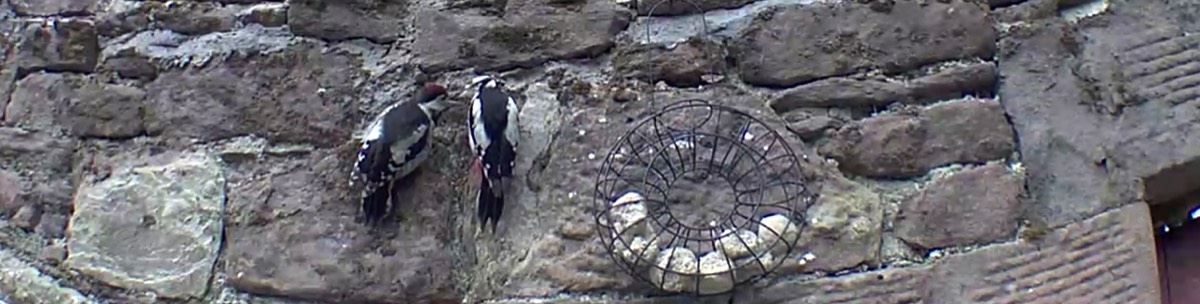
Initially we had two pairs of GSWs visiting the feeder but, when two juveniles turned up, one pair stopped coming, as far as we could tell. The male is a rare visitor now and it is mostly just Ma and two young, of which she feeds one and drives off the other. The other one is learning faster to feed itself.
Tawny owls branching out
12/06/20 18:35
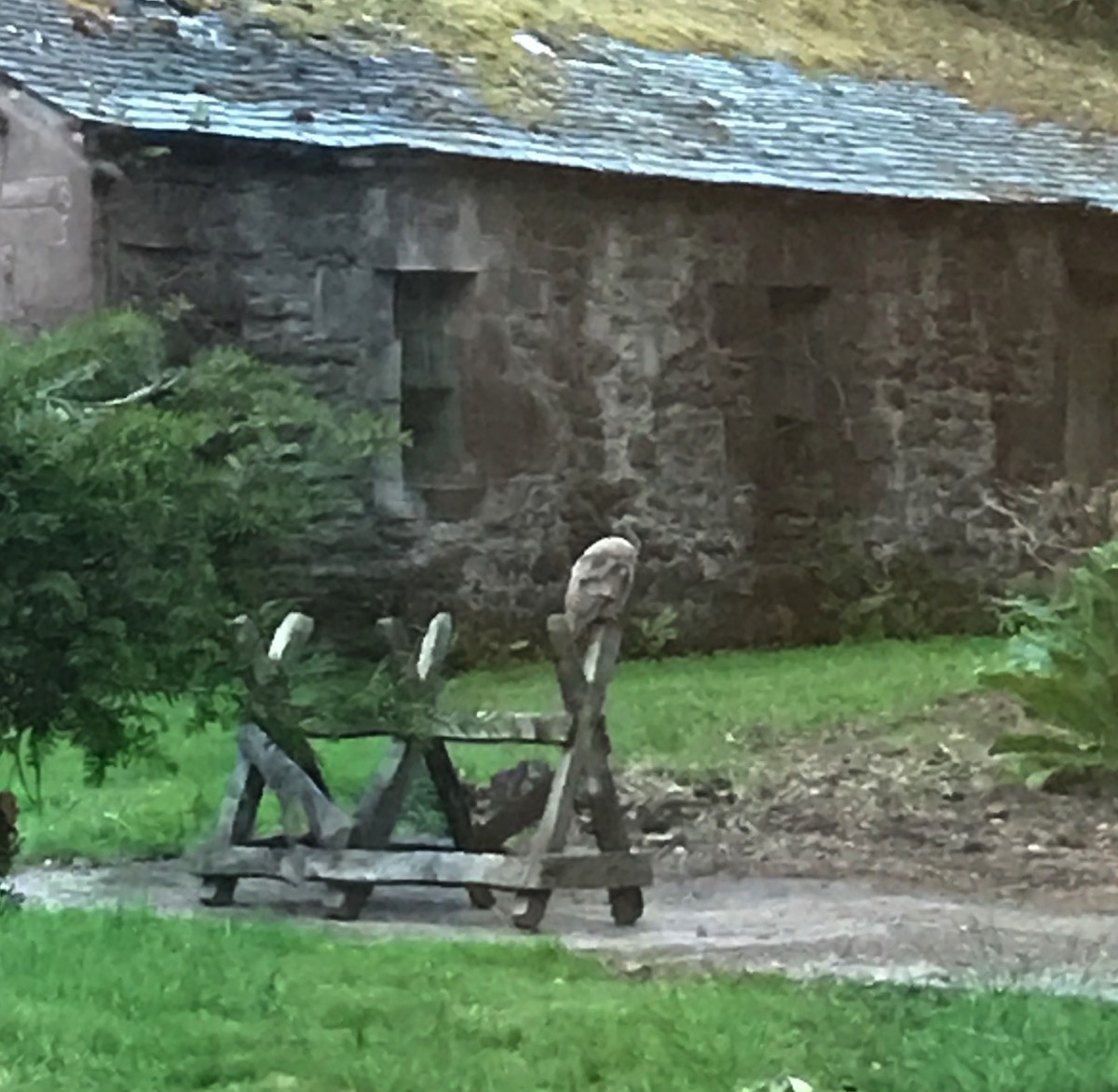
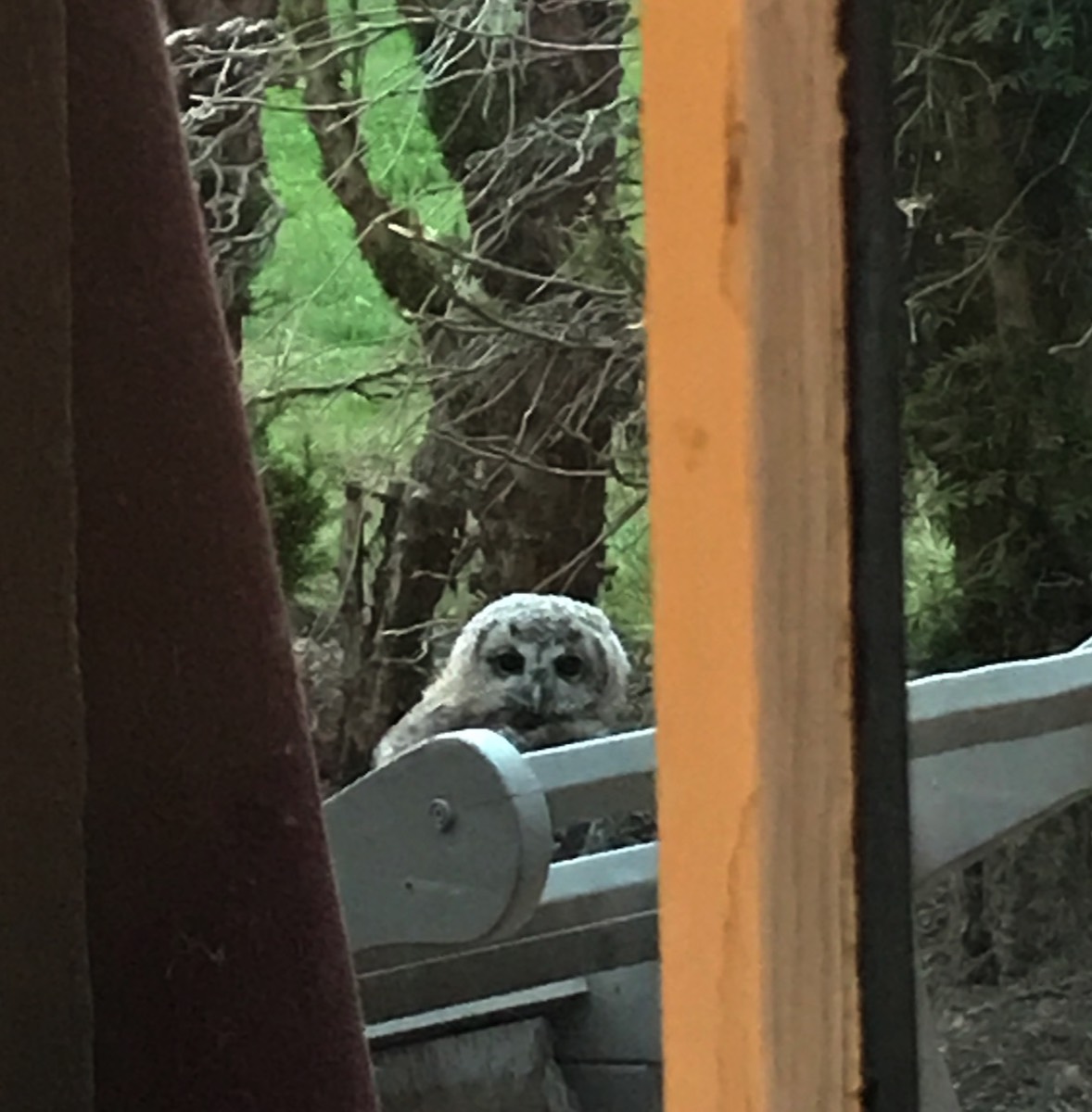
There was much noise outside the office last night. I could not see all the players from my desk but one houlet flopped onto the grass and then onto the garden furniture, constantly bellowing for food. Parent in the nearby trees insistently calling it to the safety of tree cover. It had made it as far as the saw cuddie before I retired for the night.
The ugly side of things
11/06/20 18:37
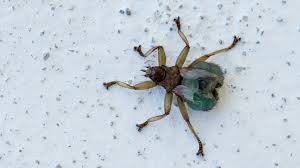
Things are said about swifts which are not all verified, mainly because what swifts get up to on the wing tends to happen well out of sight. The use of hyperbole to emphasise what amazing creatures they are is quite forgivable but that should not be allowed to detract from the many astonishing truths.
Such as their ability to fly at incredible heights. For feeding they need to be versatile and able to seek out the "aerial plankton" however high it is. Around 3000 metres is not uncommon, 6000 metres is not beyond them and they have been seen flying at or near that height when migrating. They sleep, mate and drink on the wing and only land for nesting. If they land on the ground it is usually a mistake and they will struggle to take off again and often do not succeed.
Juvenile swifts, when they fly for the first time, may not land again for two or three years! In a paper by Jan Holmgren in the 1980s they noted that near Skurup in Sweden gathering juvenile swifts were seen roosting, en masse, on trees and on a pylon. This atypical behaviour was thought to apply to swifts migrating from the furthest reaches of their northern spread, possibly related to some swifts adapting to nesting in holes in trees in northerly unpopulated areas.
Today I thought it might be a good idea to try to add some clarity to the often stated assurances that swifts are clean and safe and do not bother people or make a mess or subject people to health risks. This is largely true; if you have hosted, by choice or otherwise, swallows, martins, starlings or pigeons you will know all about what constitutes a mess. Though peacocks are a whole other thing!
I have said on the web site how swift nests rarely involve the swift being "inside" the building and swift boxes are invariably either on the outside or inside but sealed. So the chances of anything in the nest escaping into the human domain are very remote. That said, if you are ever in a position when you are required to handle a swift, alive or dead, or if you clear out swifts nests which may have had nesting material brought in by other birds, you may come across one of these beasties
The image is of a louse fly or ked. Specifically a cratærina pallida, a biting creature which can infest a nest, feeding on the blood of the swifts and swiftlets. They produce larvae in late summer which pupate and remain dormant in the nest over winter. The pupæ are small (3+ mm)dark and rounded and could easily be overlooked when cleaning out a nest which has an untypical amount of nest material from the swifts or other birds. They hatch in the spring when swift eggs are laid and then get stuck in.
It is in the interests of the ked to not kill the nestlings but they are each said to require about 5 mg of blood per day on average, which could become a serious problem for growing swiftlets if the nest is over-run. They're pretty nasty and quite large; I have seen them the size of my thumb nail, so they can be quite alarming if you're not expecting them. They are very specific about their hosts though and will not be after your blood.
So far as poop is concerned, the parent birds have been filmed in the nest often enough for us to know that they pick up and eat or take away the faeces of the young when they are small. When they are fledged and nearly ready to fly the young will "fire" their pellets out of the nest opening, which can cause chalky looking white marking on the underside of gutters or other projections which may be caught. Sometimes a well used nest will betray its presence with a little bit of white staining around the entrance but usually there is nothing to see and certainly nothing like the mess you will see at a house martin of swallow nest.
For more swift facts, try going here: https://www.swift-conservation.org/Swift%20Facts.htm
The bangers are here
01/06/20 18:38

I have heard from the new nest site in Glenartney that there have been several visits to the boxes today, which is encouraging. No nesting but this rather unconventional box is certainly on the radar for next year.